
An OEM seat cover program runs in five steps: specification, sample, branding, bulk production, and delivery. An OEM program is a multi-step process, and each step either builds or burns your launch timeline. Importers who understand the production flow make better decisions about sampling, minimum order quantities, and delivery dates. This walkthrough reflects how a full-capacity manufacturer runs custom programs, so you know what to expect at every stage - if you are buying stock lines instead, see our manufacturing process walkthrough for the production-line view.
Step 1 - Vehicle Specification and Pattern Design
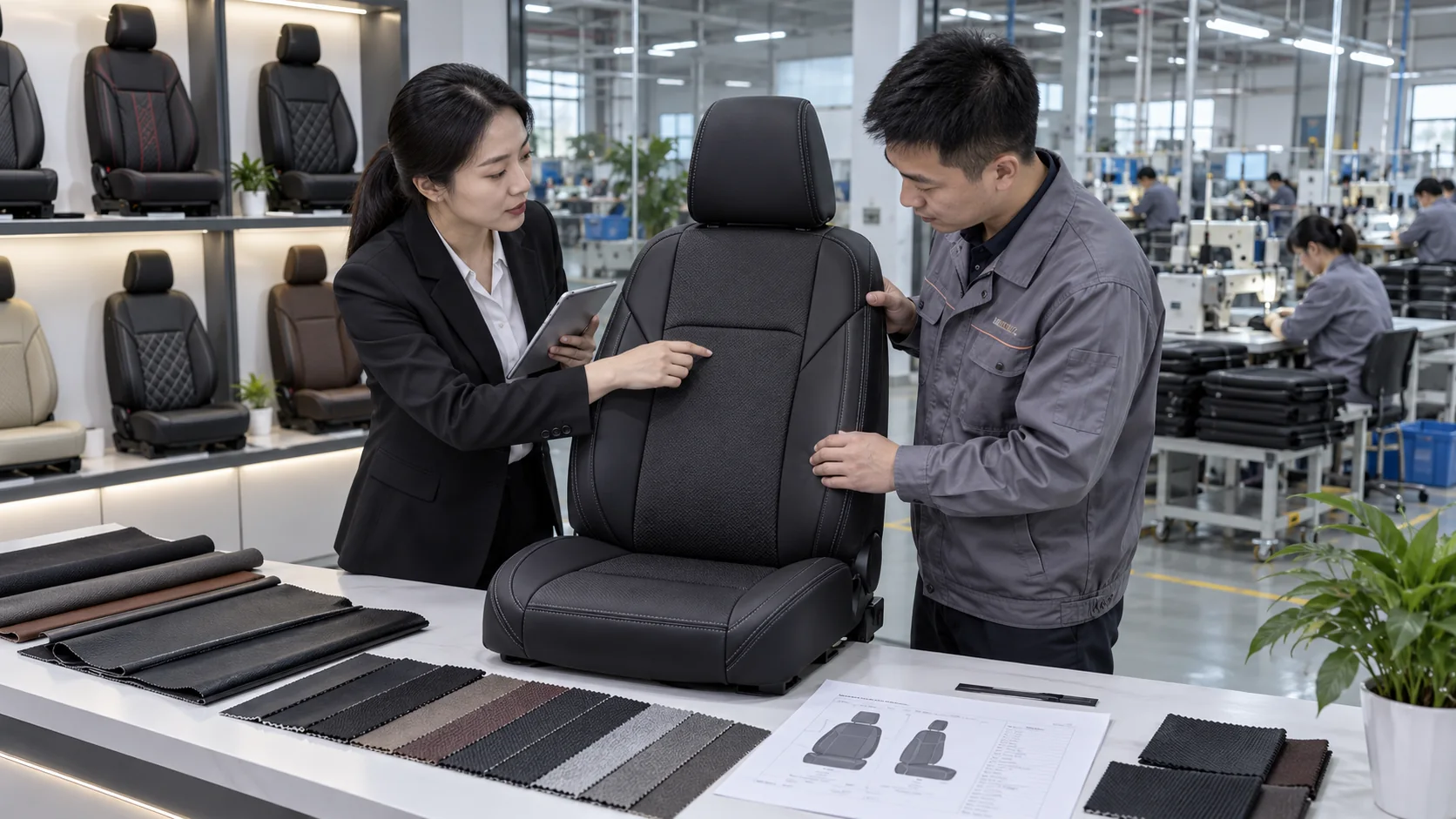
The process starts with the target vehicle. Your supplier maps the seat shape, split ratio, headrest type, and airbag position, then translates that into a cutting pattern. A factory with a library of patterns for common sedan, SUV, and truck platforms can move from specification to sample faster than one that starts from scratch every time. How our OEM program works is built on exactly this pattern library.
Step 2 - Material Selection and Sample Development
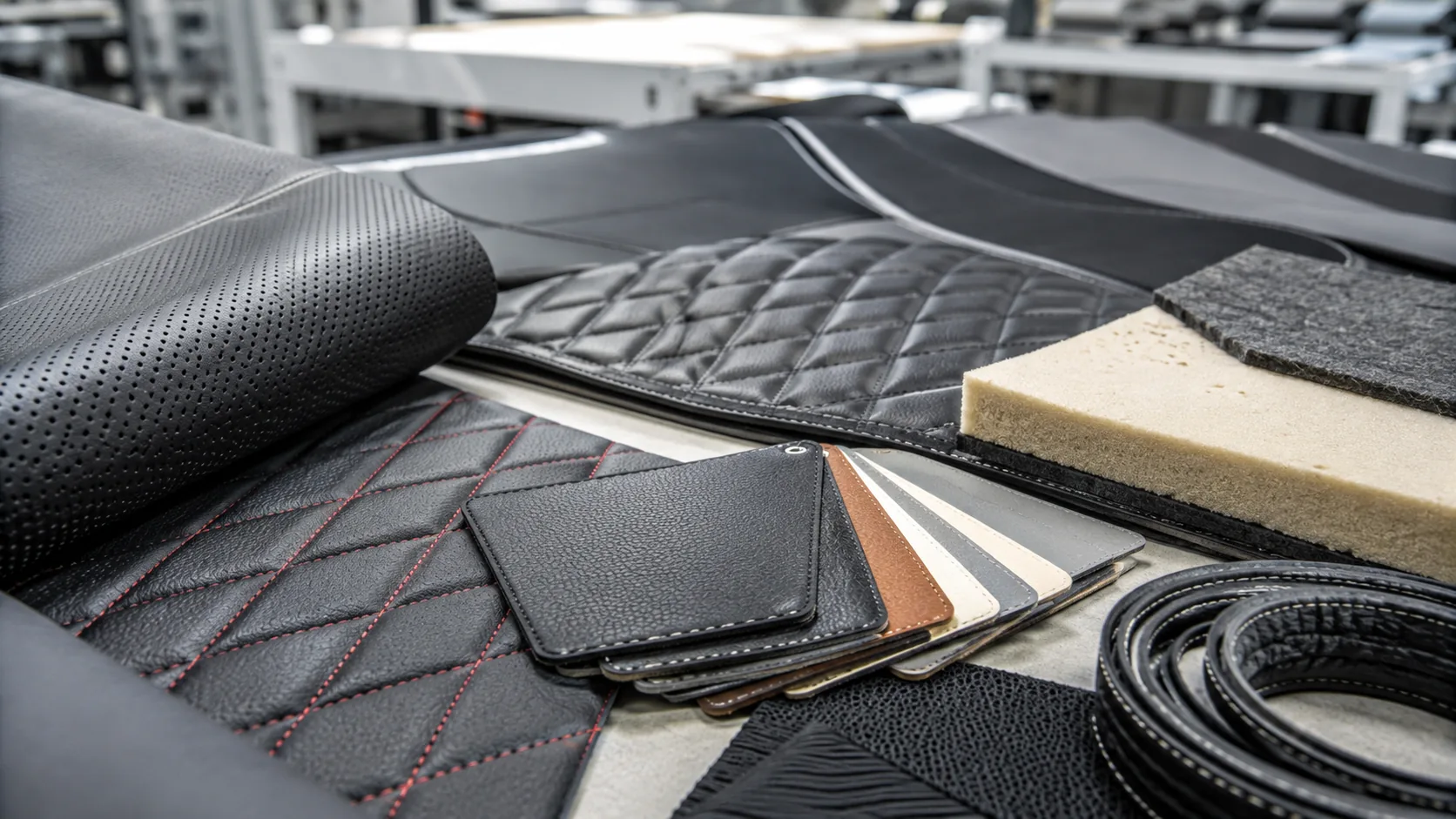
Next, materials are selected and a physical sample is produced. This is the step where most issues surface - fit, seam placement, and how the cover behaves on a real seat. Insist on a physical sample, not only photos. Check the fit on the actual vehicle model if possible, and test every seat function through the cover: recline, slide, heating, and airbag zones.
Step 3 - Logo Embroidery and Branding
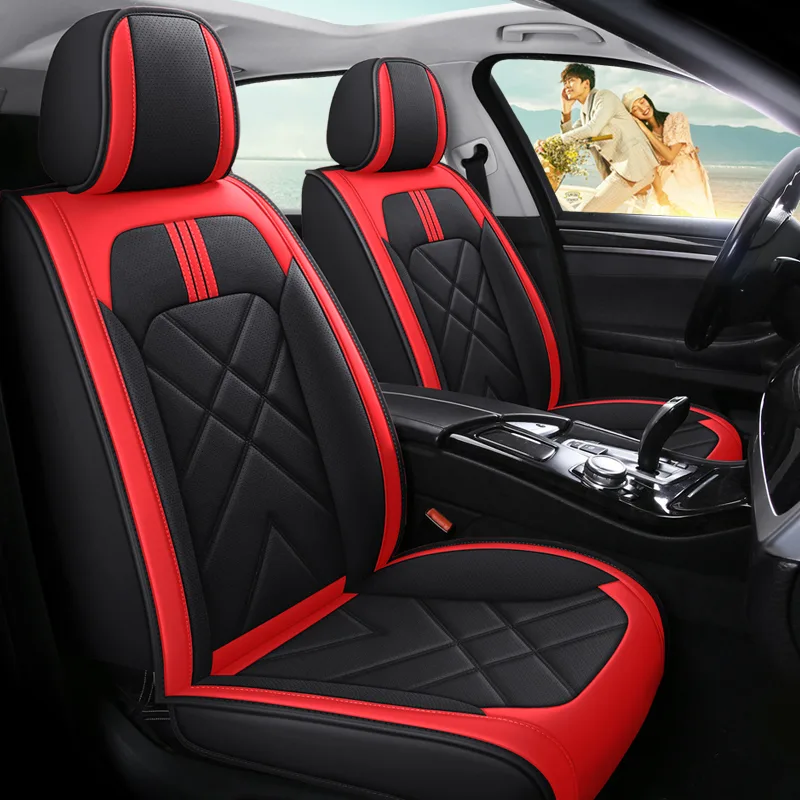
For private-label buyers, branding is where the product becomes yours. Logo embroidery can be added to headrests, seatbacks, or both - see our embroidered leather seat covers - with a minimum order quantity starting at 50 pieces per design. For fully bespoke builds, customizable leather covers let you match colors, materials, and branding to your program. Confirm the embroidery file format and thread colors early - rework here is expensive and slow.
Step 4 - Bulk Production at Scale
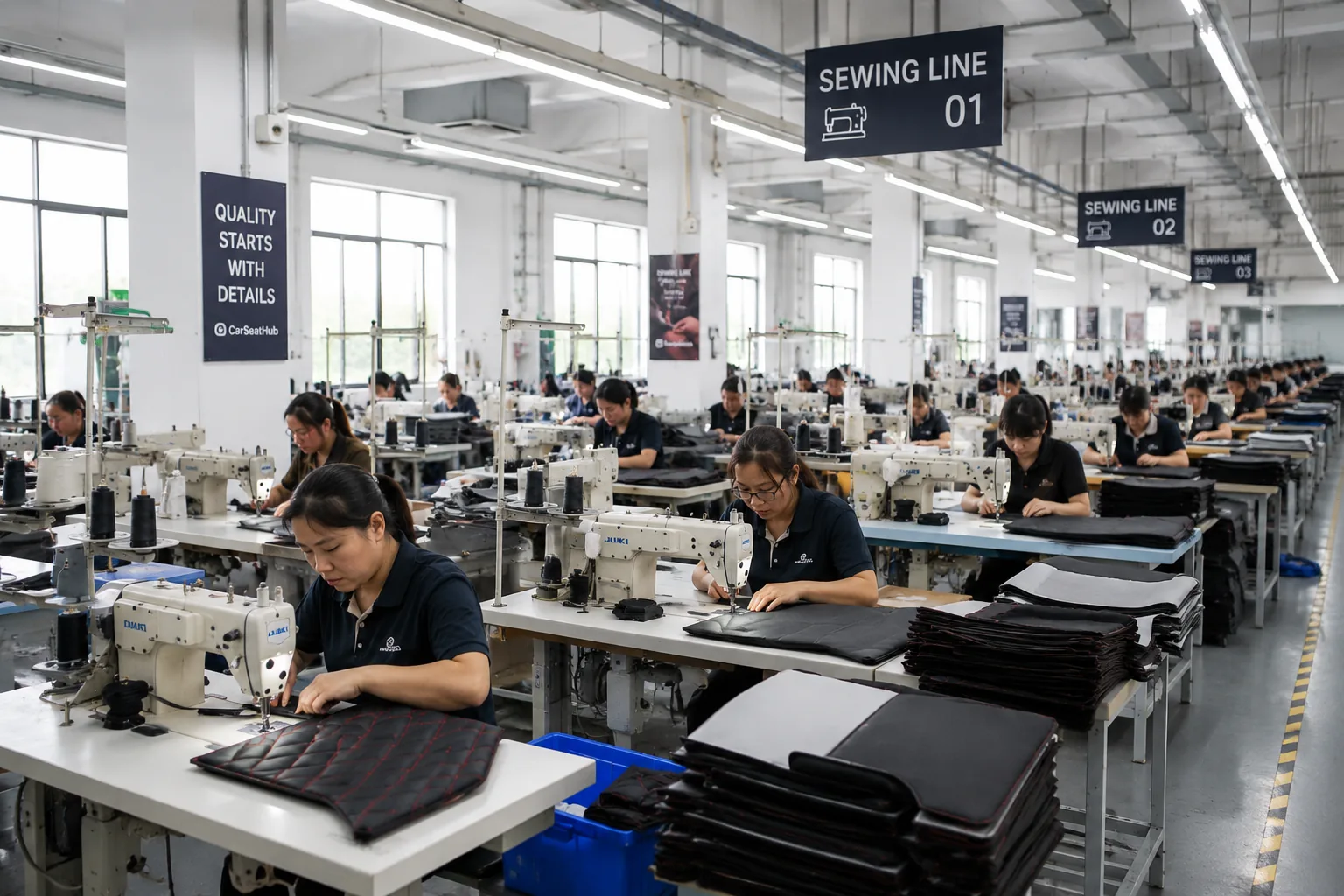
Once the sample is approved, bulk production begins. Capacity matters here. Our factory operates on a 60,000 square meter site and produces more than 2,000 seat cover sets per day, which means a standard container order moves through the line in days rather than weeks. Ask your supplier for their current production load before confirming a delivery date.
Step 5 - Inspection and Delivery
Finished goods go through in-line quality control before packing. Agree on the inspection standard - many buyers use AQL sampling checklists - and decide whether you want a third-party pre-shipment inspection. Orders ship within 7-15 business days via DHL, FedEx, or UPS for air freight, or by ocean for bulk volumes.
Building a Program, Not Just an Order
The best OEM relationships start with a clear specification package: vehicle list, target price, expected volume, and timeline. Bring that to your first call and you will cut weeks off your launch. For guidance on minimums and price tiers, see our MOQ and negotiation guide.
Ready to start your OEM program? Send your vehicle list and target price for a free quote. Request a free quote.